Space Science
A Hug for Home Away from Home
Apr 14, 2026, 3:49 PM
出典: NASA News
NASA astronaut Christina Koch, Artemis II mission specialist, hugs the Orion spacecraft in the well deck of USS John P. Murtha, Saturday, April 11, 2026. NASA astronauts Reid Wiseman, Victor Glover, and Koch, and CSA (Canadian Space Agency) astronaut Jeremy Hansen splashed down in the Pacific Ocean off the coast of California, on Friday, April […]
Details
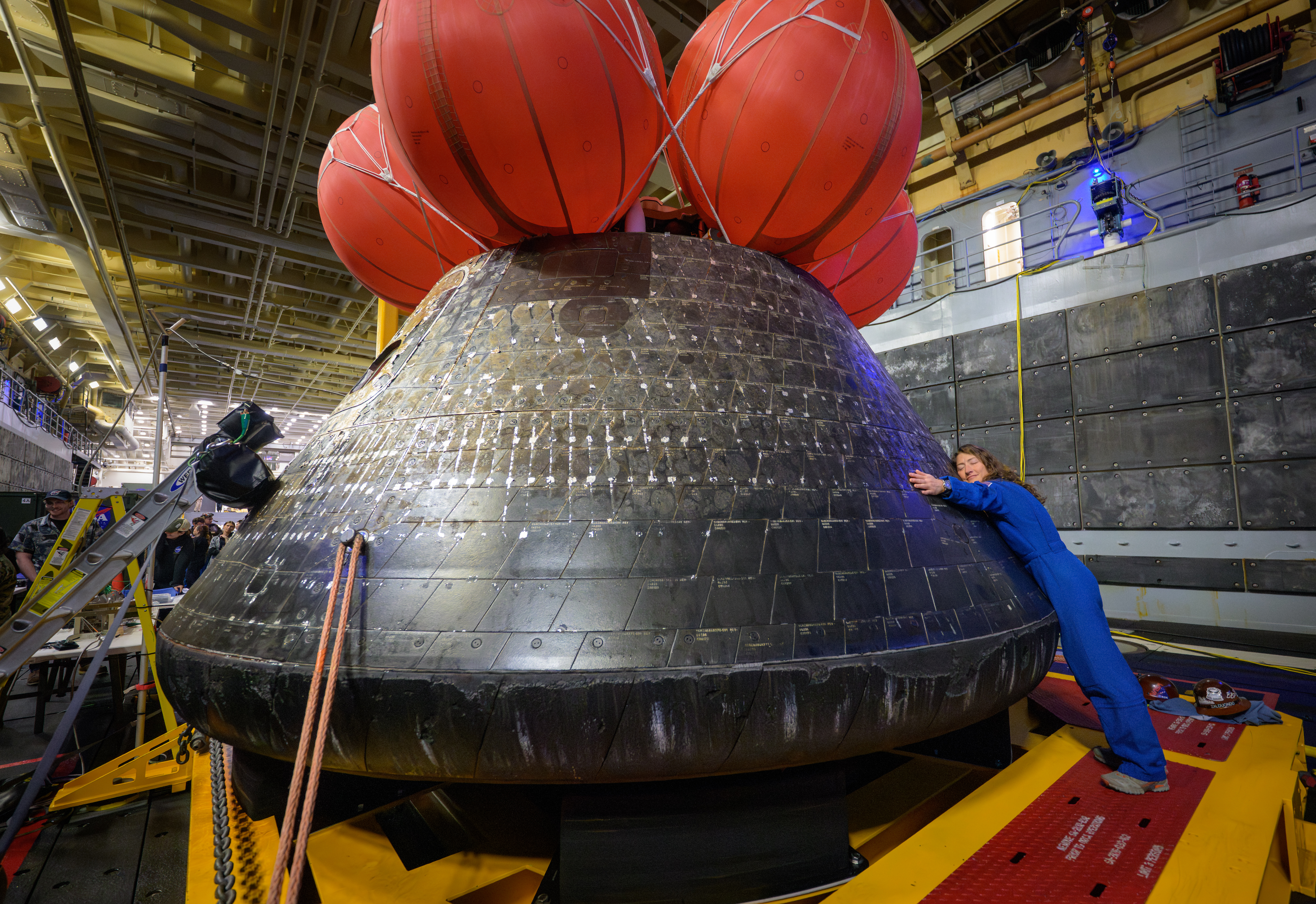
NASA astronaut Christina Koch, Artemis II mission specialist hugs the Orion spacecraft in the well deck of USS John P. Murtha, Saturday, April 11, 2026.
NASA/Bill Ingalls
NASA astronaut Christina Koch, Artemis II mission specialist, hugs the Orion spacecraft in the well deck of USS John P. Murtha, Saturday, April 11, 2026. NASA astronauts Reid Wiseman, Victor Glover, and Koch, and CSA (Canadian Space Agency) astronaut Jeremy Hansen splashed down in the Pacific Ocean off the coast of California, on Friday, April 10.
After splashdown, the astronauts were met by a combined NASA and U.S. military team that assisted them out of the spacecraft in open water and transported them via helicopter to the USS John P. Murtha for initial medical checkouts. On April 11, the astronauts returned to the agency’s Johnson Space Center in Houston for a news conference.
Artemis II is the first crewed mission in the program. Lessons learned from this test flight will inform our return to the lunar surface and future missions to Mars. Learn more about the cadence for upcoming Artemis missions.
Image credit: NASA/Bill Ingalls
Related Knowledge
mentions
Orion Spacecraft
The Orion spacecraft is designed to carry astronauts beyond low Earth orbit, supporting missions to the Moon and eventually to Mars. It features advanced life support systems and robust safety measures for deep space travel.
mentions
Artemis Program
The Artemis Program is a NASA initiative aimed at returning humans to the Moon by the mid-2020s, with the goal of establishing a sustainable human presence on the lunar surface and preparing for future missions to Mars.