Space Science
Artemis II Astronauts Aboard USS John P. Murtha
Apr 13, 2026, 5:30 PM
出典: NASA News
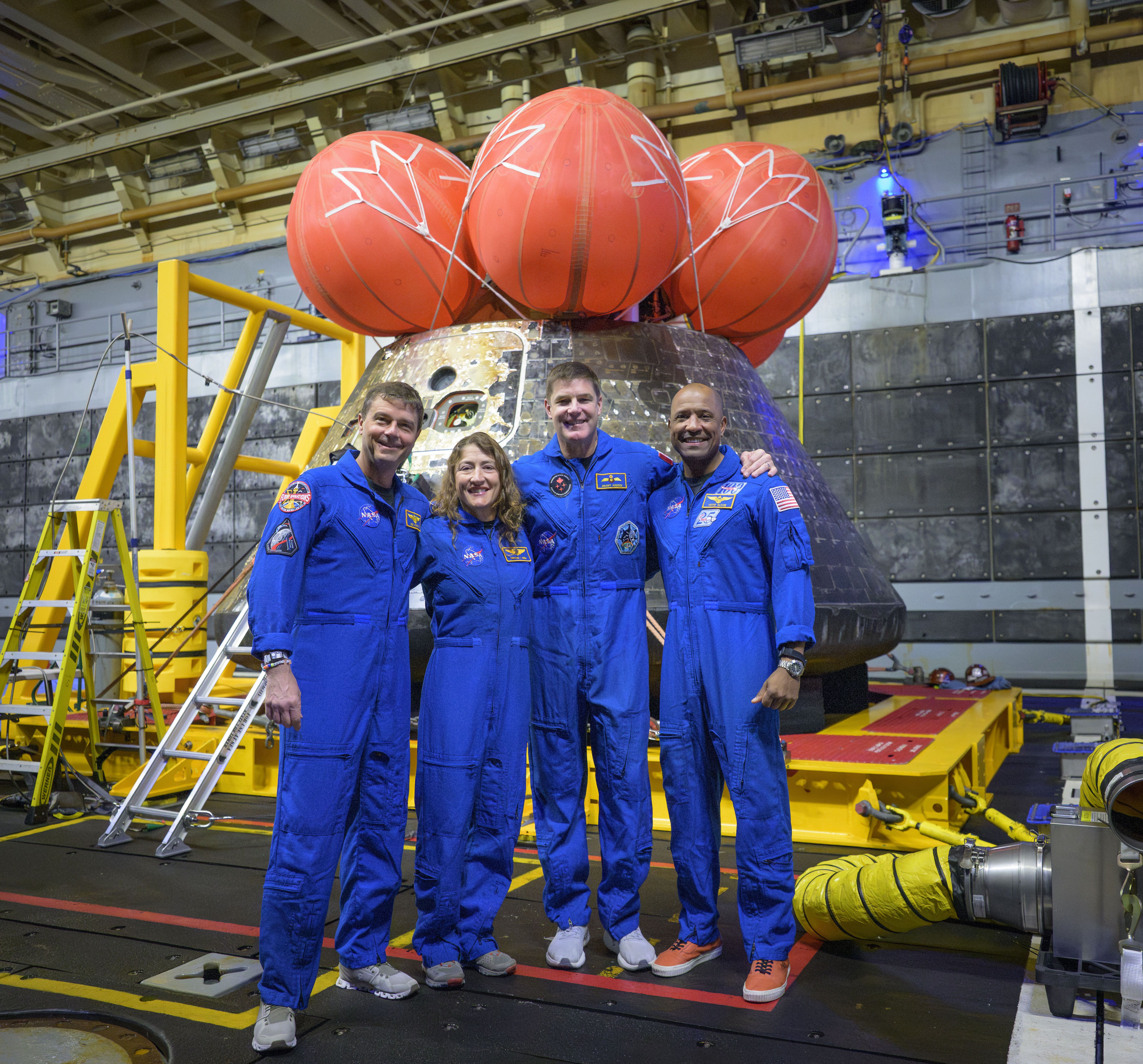
The first astronauts to travel to the Moon in more than half a century are back on Earth after a record-setting mission aboard NASA’s Artemis II test flight. NASA astronauts Reid Wiseman (commander), Christina Koch (mission specialist), Victor Glover (pilot), and CSA astronaut Jeremy Hansen (mission specialist) pose for a group photo in the well […]
Details
NASA/Bill Ingalls
The first astronauts to travel to the Moon in more than half a century are back on Earth after a record-setting mission aboard NASA’s Artemis II test flight.
NASA astronauts Reid Wiseman (commander), Christina Koch (mission specialist), Victor Glover (pilot), and CSA astronaut Jeremy Hansen (mission specialist) pose for a group photo in the well deck of the USS John P. Murtha after inspecting the Orion spacecraft on Saturday, April 11, 2026.
The crew splashed down in the Pacific Ocean off the coast of California on Friday, April 10, at 5:07 p.m. PDT (8:07 p.m. EDT), marking the completion of their Artemis II mission.
After splashdown in the Pacific Ocean, the astronauts were met by a combined NASA and U.S. military team that assisted them out of the spacecraft in open water and transported them via helicopter to the USS John P. Murtha for initial medical checkouts.
Artemis II is the first crewed flight aboard NASA’s human deep space capabilities, paving the way for future lunar surface missions.
Related Knowledge
mentions
Artemis Program
The Artemis Program is a NASA initiative aimed at returning humans to the Moon by the mid-2020s, with the goal of establishing a sustainable human presence on the lunar surface and preparing for future missions to Mars.
mentions
Human Spaceflight
Human spaceflight refers to the travel of humans into or through outer space. It includes missions to the ISS, lunar landings, and potential future missions to Mars and beyond, involving complex life support systems and safety measures.