Space Science
Earthset
Apr 7, 2026, 6:54 PM
出典: NASA News
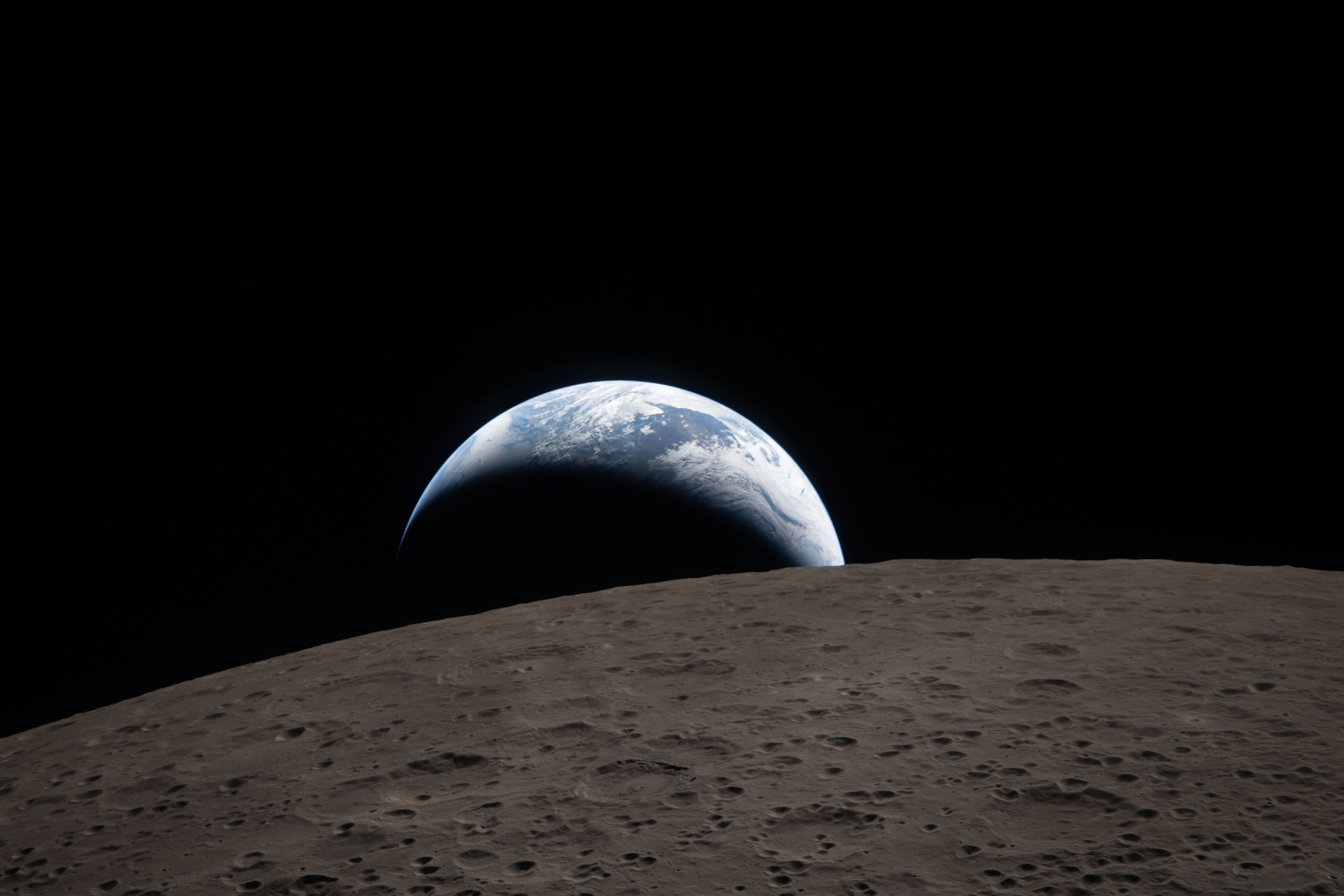
The Artemis II crew captured this view of Earth setting on April 6, 2026, as they flew around the Moon. As the astronauts flew over the Moon’s far side, the crew photographed and described terrain features including impact craters, ancient lava flows, and surface cracks and ridges formed as the Moon slowly evolved over time. […]
Details
NASA
The Artemis II crew captured this view of Earth setting on April 6, 2026, as they flew around the Moon. As the astronauts flew over the Moon’s far side, the crew photographed and described terrain features including impact craters, ancient lava flows, and surface cracks and ridges formed as the Moon slowly evolved over time. They also noted differences in color, brightness and texture, which provide clues that help scientists understand the composition and history of the lunar surface.
The image is reminiscent of the iconic Earthrise image taken by astronaut Bill Anders 58 years earlier as the Apollo 8 crew flew around the Moon. The Apollo 8 mission was the first crewed spacecraft to circumnavigate the Moon.
For more imagery from the mission, visit our Artemis II Multimedia Page.
Image credit: NASA
Related Knowledge
mentions
Lunar Geology
Lunar geology is the study of the composition, structure, and history of the Moon's surface and interior. It involves analyzing lunar rocks and soil samples to understand the Moon's formation, evolution, and the processes that have shaped its landscape over billions of years.
mentions
Space Exploration
Space exploration refers to the use of astronomy and space technologies to explore outer space. It involves missions to other planets, moons, and celestial bodies, often utilizing spacecraft and rovers to gather data and conduct experiments.