Space Science
High-Speed Flight Project Overview
Mar 5, 2026, 1:05 AM
出典: NASA News
What We do The High-Speed Flight (HSF) project develops technologies that make high-speed, airbreathing, commercial flight possible from Mach 1 to Mach 5 and above. HSF creates tools, technologies, and knowledge that will help eliminate today’s technical barriers to practical supersonic flight, most notably sonic boom. The project supports the X-59 quiet supersonic vehicle testing […]
Details
1 min read
Preparations for Next Moonwalk Simulations Underway (and Underwater)

Artist concept of a high-speed point-to-point vehicle.
NASA Langley
What We do
The High-Speed Flight (HSF) project develops technologies that make high-speed, airbreathing, commercial flight possible from Mach 1 to Mach 5 and above.
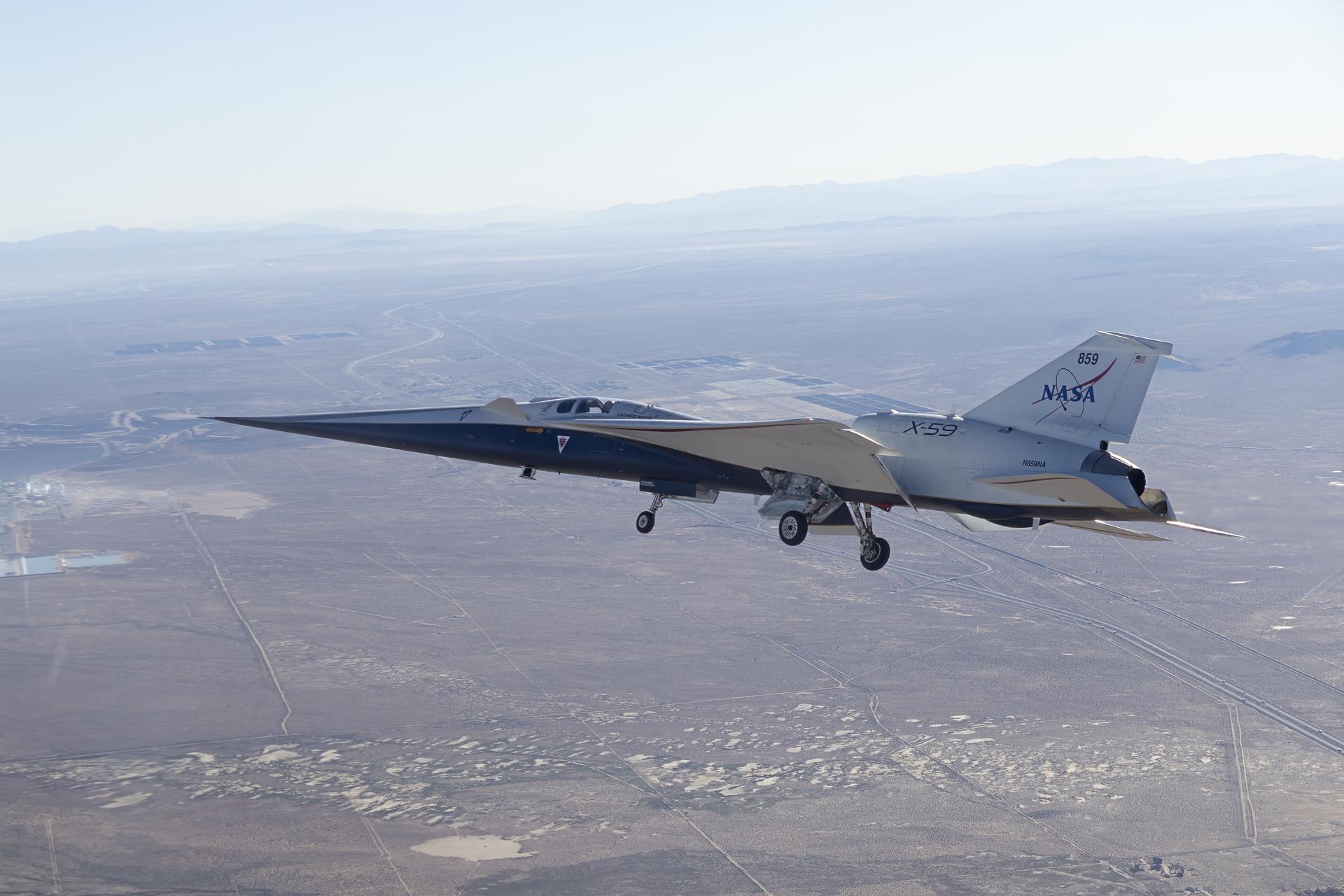
HSF creates tools, technologies, and knowledge that will help eliminate today’s technical barriers to practical supersonic flight, most notably sonic boom. The project supports the X-59 quiet supersonic vehicle testing by gathering acoustic data and validating tools that predict in-flight sonic booms.
HSF conducts fundamental and applied research that explores key challenges in reusable, hypersonic flight technology.
Future Applications
The project evaluates the potential for future commercial hypersonic vehicles, including reusable access to space and commercial point-to-point missions.
Unique Hypersonic Facilities and Expertise
NASA maintains unique facilities, laboratories, and subject matter experts who investigate fundamental and applied research areas to solve the challenges of hypersonic flight. The High-Speed Flight project coordinates closely with partners in industry, academia, and other government agencies to leverage relevant data sets to validate computational models. These partners also utilize NASA expertise, facilities, and computational tools. Partnerships are critical to advancing the state of the art in hypersonic flight.
Contact the High-Speed Flight Project by email at larc-htp-inquiries@mail.nasa.gov
Explore More



Share
Related Terms
Related Knowledge
mentions
Supersonic Flight
Supersonic flight refers to the flight of an object through the air at speeds greater than the speed of sound, which is approximately 343 meters per second (1,125 feet per second) at sea level. This type of flight creates shock waves, resulting in a sonic boom, and poses unique engineering challenges and considerations for aircraft design.
mentions
Sonic Boom
A sonic boom is the sound associated with the shock waves created when an object travels through the air at supersonic speeds. This phenomenon can cause significant noise pollution and has led to restrictions on supersonic flight over land in many countries.