Space Science
Indoor Testing Facilities available at the NASA Unmanned Autonomy Research Complex (NUARC)
Apr 9, 2026, 9:21 PM
出典: NASA News
WindShaper A large WindShaper fan array is available for dynamic low-speed and hovering flight research. The WindShaper is ideal for generating arbitrary wind gradients and wind gusts via a simple Python API. A companion WindProbe is also available for quick surveys of flows. The WindProbe utilizes the lab’s OptiTrack motion capture system to extract the […]
Details
WindShaper
April 8, 2025
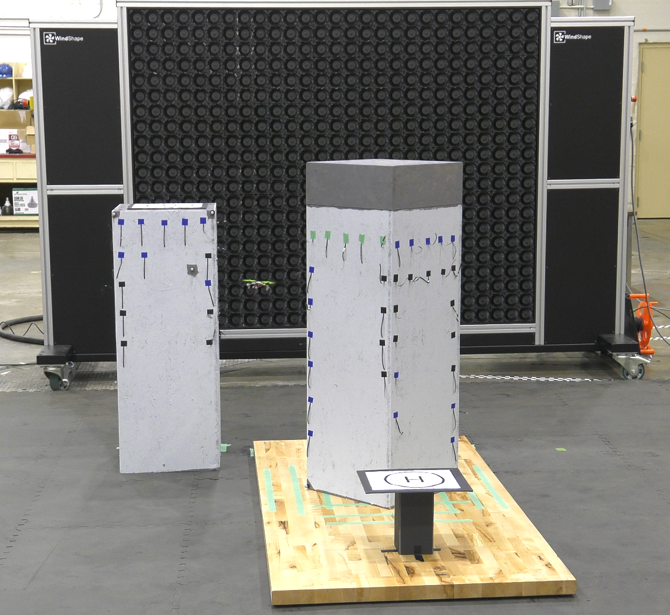
A large WindShaper fan array is available for dynamic low-speed and hovering flight research.
NASA/John Melton

April 9, 2025
The Navigation Cameras, or Navcams, aboard NASA’s Perseverance Mars rover captured this view of the rover’s deck on Feb. 20, 2021.
NASA/JPL-Caltech
A large WindShaper fan array is available for dynamic low-speed and hovering flight research. The WindShaper is ideal for generating arbitrary wind gradients and wind gusts via a simple Python API. A companion WindProbe is also available for quick surveys of flows. The WindProbe utilizes the lab’s OptiTrack motion capture system to extract the position and orientation of the 5-hole cone probe located on the probe tip.
•Large dynamic fan array: 9’x7’, 1134 fans arranged as 567 ‘wind pixels’
•Wind speeds: 0 to 16 m/s (0 to 36 mph/31 kts)
•Acceleration: 4 m/s2, Deceleration: 2.5 m/s2
•Each fan is programmable via Python scripting
•Replicates steady winds, gusts, and wind gradients
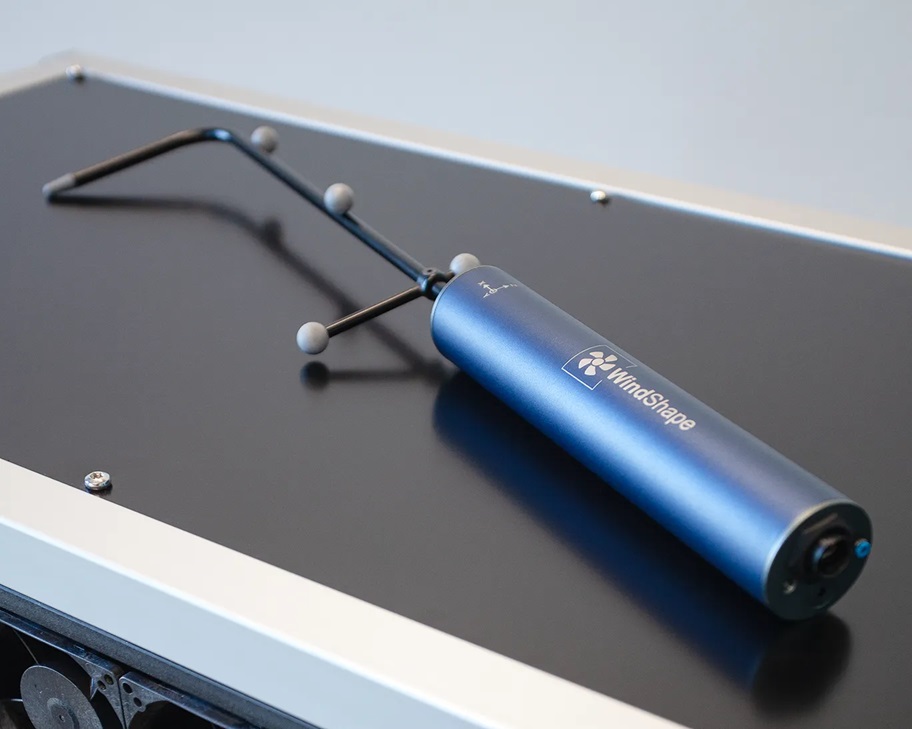
WindProbe for handheld mobile wind data collection.
WindShaper
Related Knowledge
mentions
Wind Tunnel Testing
Wind tunnel testing is a method used to study the aerodynamic properties of objects by simulating wind conditions. It allows researchers to analyze how air flows around a model, which is crucial for designing vehicles, aircraft, and other structures that interact with airflow.
mentions
Motion Capture Technology
Motion capture technology is used to record the movement of objects or people. This technology is widely used in various fields, including film production, video game development, and robotics, to create realistic animations and improve the accuracy of robotic movements.