Fundamental Science
Michael Frayn on Copenhagen: ‘When I wrote it, I didn’t think it would even be staged’
Apr 14, 2026, 10:10 AM
出典: Physics World
<p><strong>Chris Sinclair</strong> talks to Michael Frayn about a new revival of his classic science play </em>Copenhagen</em></p>
<p>The post <a href="https://physicsworld.com/a/michael-frayn-on-copenhagen-when-i-wrote-it-i-didnt-think-it-would-even-be-staged/">Michael Frayn on <em>Copenhagen</em>: ‘When I wrote it, I didn’t think it would even be staged’</a> appeared first on <a href="https://physicsworld.com">Physics World</a>.</p>
Details
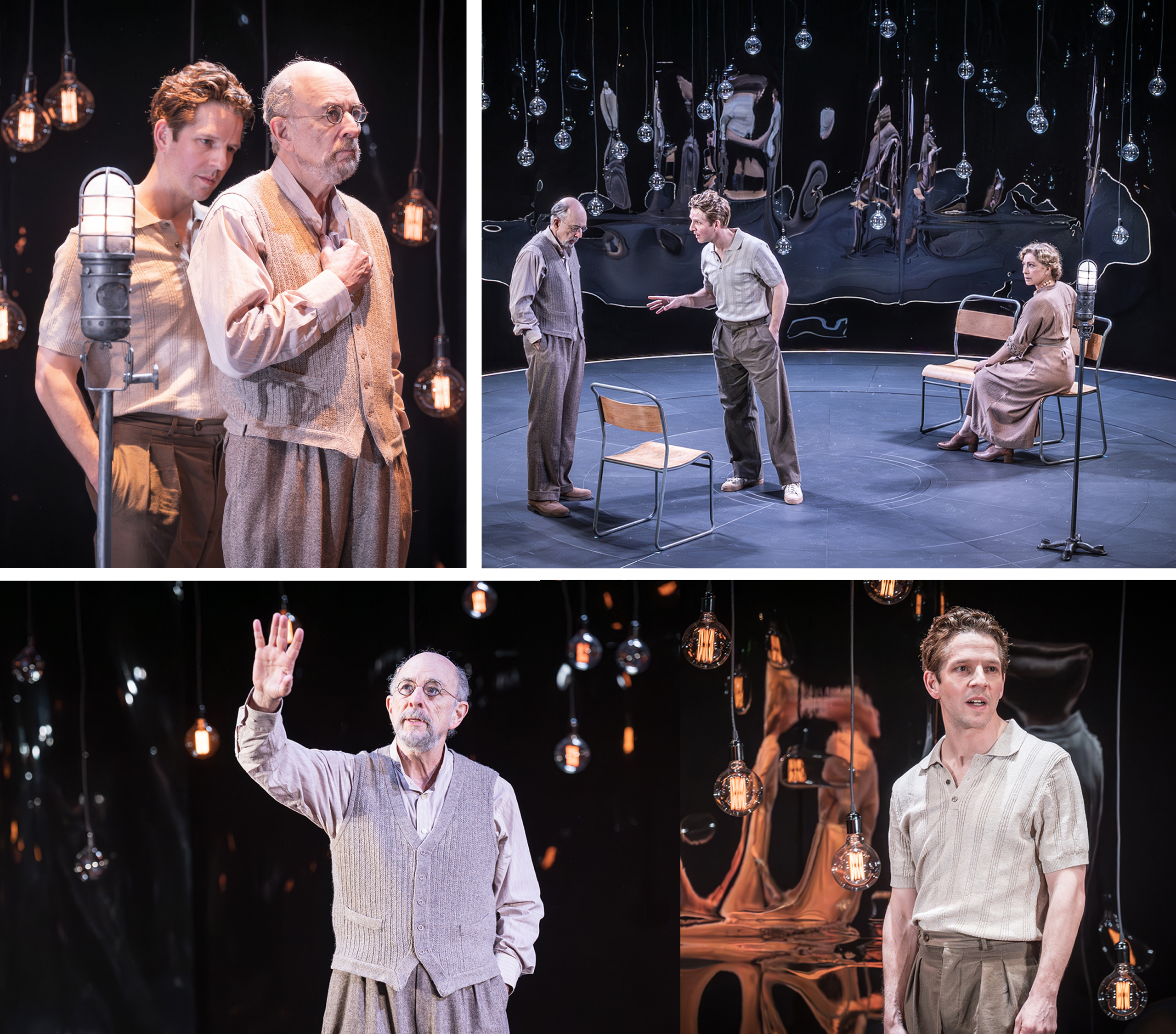
When Werner Heisenberg retreated at daybreak to an isolated rock on the island of Helgoland in June 1925 to contemplate his development of quantum physics, he might well have been surprised to know that this moment would be recreated by an actor perched on the back of a chair in a pool of water on a stage over 100 years later.
However, this is exactly what happens in a revival of Michael Frayn’s play Copenhagen, currently at Hampstead Theatre in London.
The play explores Heisenberg’s visit to see Niels Bohr in Nazi-occupied Copenhagen in 1941 and features just three characters, Heisenberg, Bohr and Bohr’s wife Margrethe. The intentions surrounding Heisenberg’s visit have always been unclear, with this uncertainty being central to the play, which was first staged to critical and popular acclaim at the National Theatre, London, in 1998.
The initial success of Copenhagen came even as a surprise to its writer Michael Frayn. “When I wrote it, I didn’t think it would even be staged,” he admitted in an interview with Physics World. Eventually, Copenhagen went on to receive many accolades, including a Tony Award for Best Play and enjoyed over 300 performances in London and New York.
The new production at the Hampstead Theatre is directed by Michael Longhurst, who told me how struck he was by the level of detail in the play.
“While Frayn is super conscious of this as an act of fiction and theoretical imaging, I don’t think I’ve ever worked on a play that feels like it’s been as rigorously researched,” he says.
“I think there’s a real pleasure and opportunity as a director, when you’re staging plays that are tapping into scientific principles. There is a beautiful probing parallel between the uncertainty of intention and Heisenberg’s uncertainty principle.”
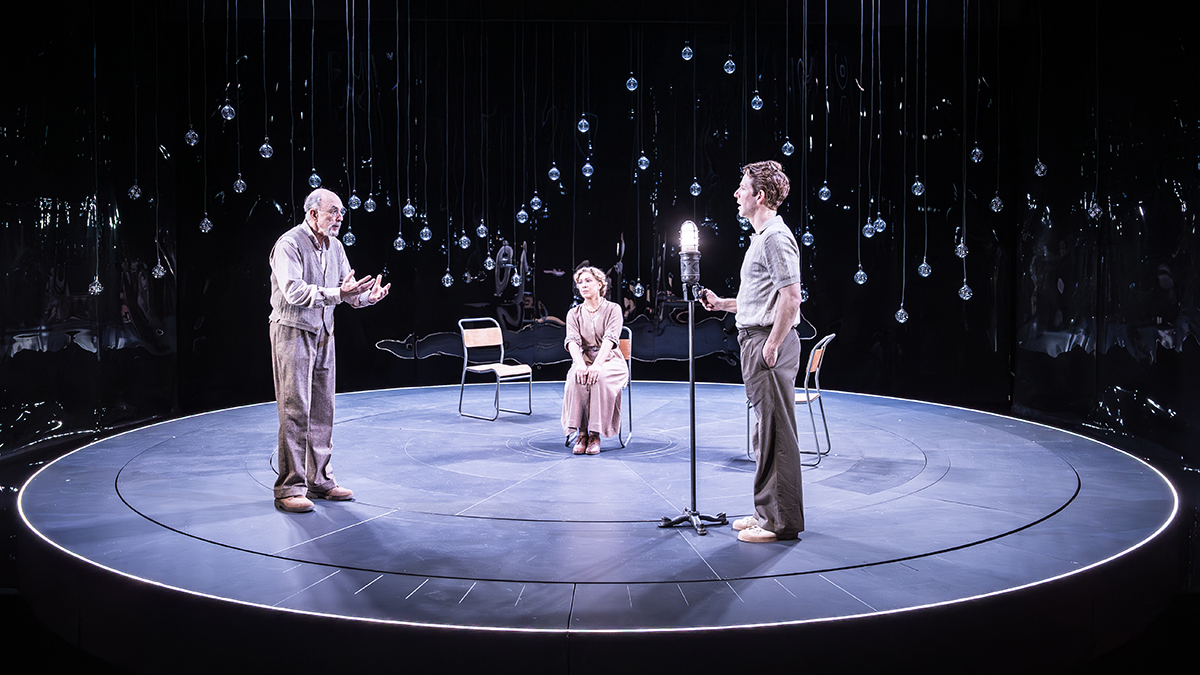
Heisenberg’s involvement in what became the German nuclear-bomb programme is likely to have been a significant factor in his seeking to meet with Bohr, but the beauty of the play is the uncertainty behind the real motivation for the meeting.
As Frayn told Physics World: “The play is about the elusiveness of human intention, so I don’t claim to have a settled view of Heisenberg’s.”
However, Frayn hints that he is most persuaded by Heisenberg’s own account, which he gave many years later, that he wanted to warn the Allies about Germany’s plan to build a bomb, rather than trying to get information from Bohr to help the Nazi programme.
“Bohr’s confirmation in his unsent letter [in 1957],” says Frayn, “that Heisenberg had in fact overridden all normal obligations of wartime secrecy to tell him that Germany was doing research on a nuclear weapon – and that he now believed it was in theory possible to build one – seems to me to go some way to reinforcing the account that Heisenberg himself gave later of his intentions in seeking the meeting in 1941.”
As for the new revival at Hampstead, Longhurst says it is a chance “to engage with an incredible play that hasn’t been seen in London since that original production”.
“I’m very proud of the cast that we’ve assembled in Damien Molony, Richard Schiff and Alex Kingston, who I think are individually and collectively brilliant. I guess what is thrilling about the play when you see it live, and it is three bodies in a contained space, is watching them shift between prosecutor, witness and judge. That triangle of relationships is constantly shifting. I like to imagine them as three entangled souls with an unanswered question.”
- Copenhagen runs at Hampstead Theatre, London, UK until 2 May.
The post Michael Frayn on <em>Copenhagen</em>: ‘When I wrote it, I didn’t think it would even be staged’ appeared first on Physics World.