Space Science
NASA Research Proposes Technology to Seek Earth-Like Exoplanets
Mar 24, 2026, 2:18 PM
出典: NASA News
As NASA seeks to understand the mysteries of the universe, the agency is advancing technologies to locate and explore Earth-like planets far beyond our solar system. A key element of this research involves observing reflected light from exoplanets, which can reveal indicators of Earth-like features such as water and oxygen. However, detecting this faint reflected […]
Details
2 Min Read
NASA Research Proposes Technology to Seek Earth-Like Exoplanets
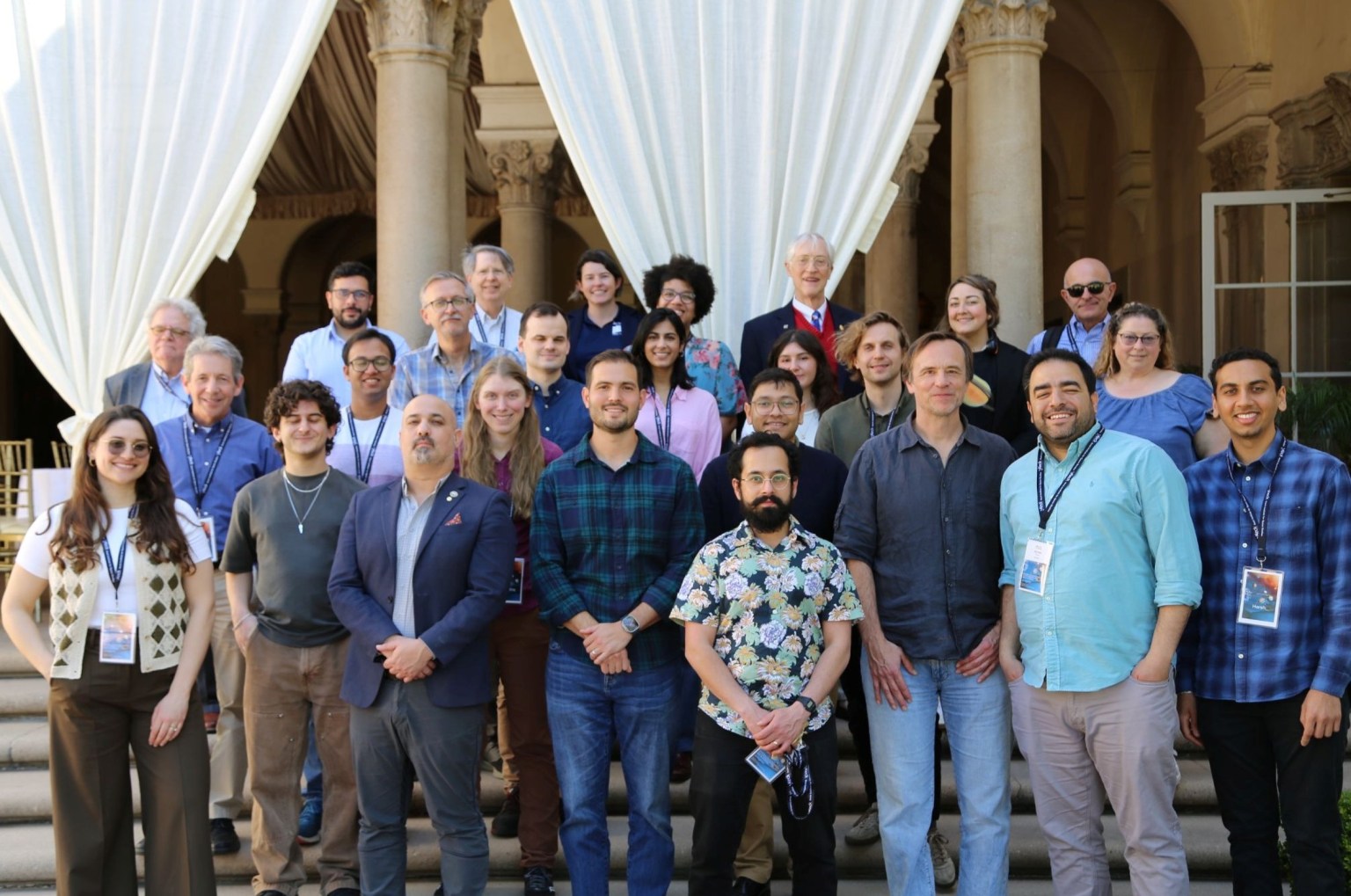
Credits:
KISS
As NASA seeks to understand the mysteries of the universe, the agency is advancing technologies to locate and explore Earth-like planets far beyond our solar system. A key element of this research involves observing reflected light from exoplanets, which can reveal indicators of Earth-like features such as water and oxygen. However, detecting this faint reflected light with current telescope technology remains a significant challenge due to the overwhelming brightness of nearby stars and other celestial objects.
NASA’s Hybrid Observatory for Earth-like Exoplanets (HOEE) concept presents a potential solution by combining an orbiting starshade with a large ground-based telescope to suppress starlight and enable direct imaging of exoplanets.
We have pioneered a transformative approach to the search for life beyond our solar system by deploying a space-borne starshade to cast a near perfect shadow over Earth’s largest telescopes, we suppress stellar glare before it ever enters the atmosphere.
Dr. John Mather
HOEE principal investigator at NASA’s Goddard Space Flight Center in Greenbelt, Maryland
Recent research, published earlier this year and featured on the cover of Monday’s Nature Astronomy March issue, suggests the HOEE concept could produce much sharper images allowing us to see entire exoplanetary systems and to clearly separate planet images from each other as well as from interference of dust clouds, the host star, and from the starshade itself. Its extreme sensitivity could enable the detection of small planets, and even large dwarf planets. Most notably, it could enable high-fidelity, wide-band spectroscopy, a scientific technique that can be used to study the interaction between matter and light, improving the path to identifying the chemical signatures of life.
For decades, the starshade was a novel concept. Now, NASA’s Innovative Advanced Concepts (NIAC) program is turning that idea into a buildable reality. Through a series of targeted studies, NASA researchers are investigating whether it could be practical to build and develop an engineering roadmap.
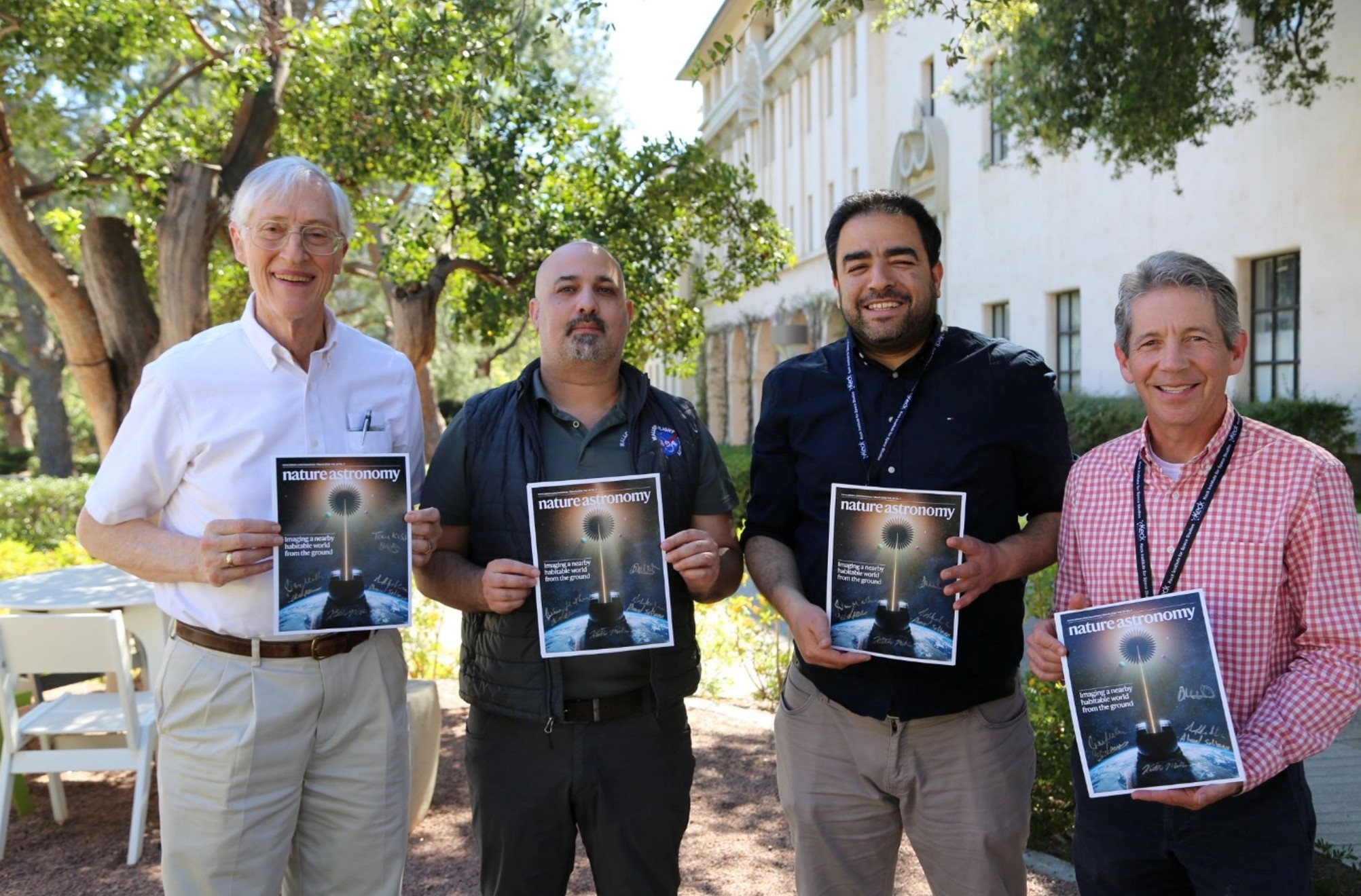
Team leading NASA’s Hybrid Observatory for Earth-like Exoplanets concept pictured with the cover of Nature Astronomy featuring their research “The observation of Earth-like exoplanets with ground-based telescopes and a shared orbiting starshade.” From left NASA’s Goddard Space Flight Center researchers Dr. John Mather and Dr. Eliad Peretz, followed by NASA’s Jet Propulsion Laboratory researchers Dr. Ahmed Soliman and Dr. Stuart Shaklan.
KISS
NASA’s Hybrid Observatory for Earth-like Exoplanets (HOEE) is a three-time NIAC award recipient, having received Phase I awards in 2022 and 2025. The HOEE concept is supported by researchers at NASA Goddard, NASA’s Jet Propulsion Laboratory in Southern California, and NASA’s Ames Research Center in California’s Silicon Valley.
Latest Related Research

Share
Details
Last Updated
Mar 24, 2026