Space Science
NASA’s X-59 Experimental Supersonic Aircraft Makes Second Flight
Mar 20, 2026, 11:27 PM
出典: NASA News
NASA’s quiet supersonic X-59 aircraft made its second flight on Friday, kicking off a series of dozens of test flights in 2026.  Although the flight duration was abbreviated due to a technical issue, the team was able to collect information that will inform future tests.  “Despite the early landing, this is a good day for the team. We collected more data, and the pilot landed safely,” said Cathy Bahm, project manager for NASA’s Low-Boom […]
Details
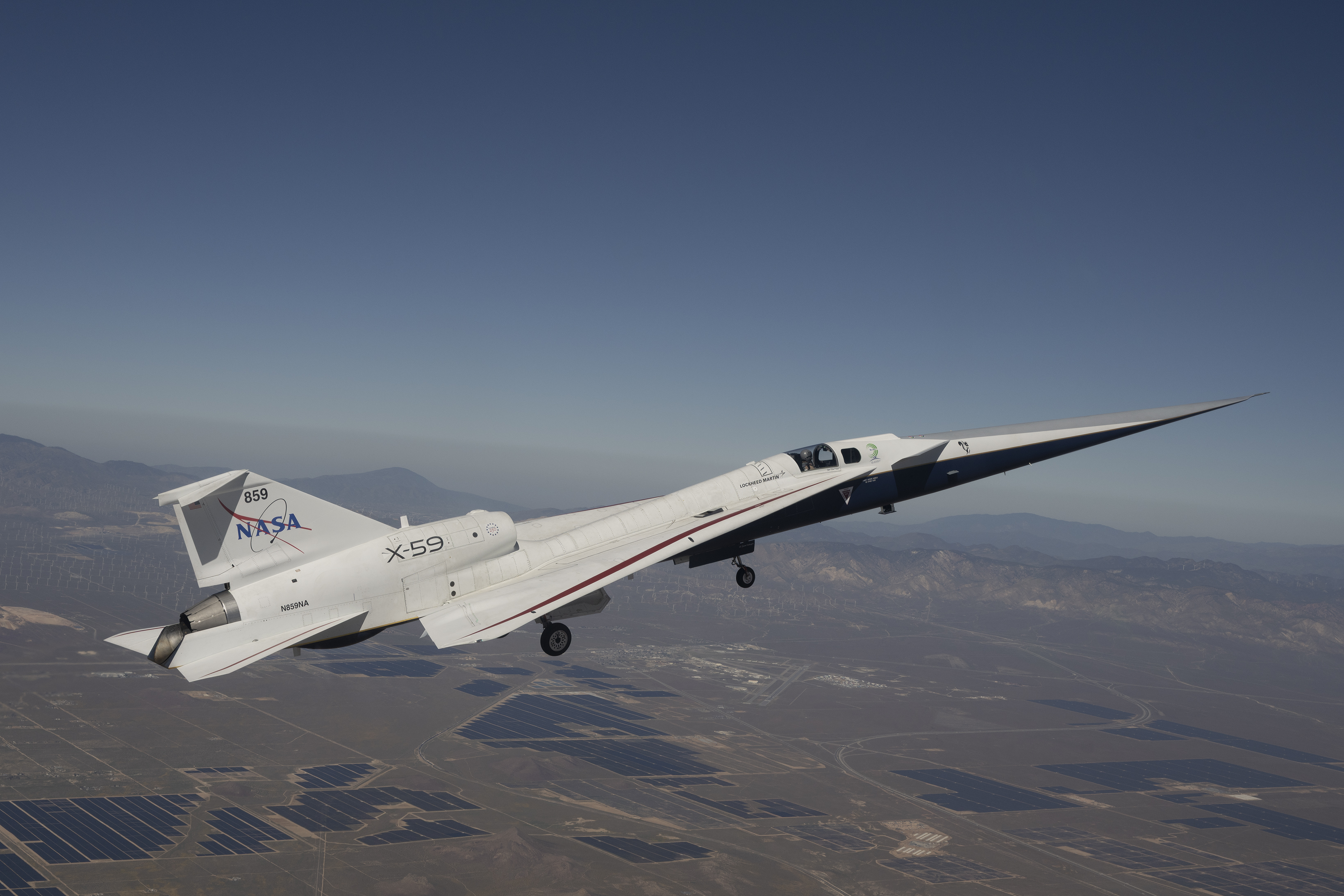
NASA’s quiet supersonic X-59 aircraft flew its second flight on March 20, 2026, near NASA’s Armstrong Flight Research Center in Edwards, California.
NASA/Jim Ross
NASA’s quiet supersonic X-59 aircraft made its second flight on Friday, kicking off a series of dozens of test flights in 2026.
Although the flight duration was abbreviated due to a technical issue, the team was able to collect information that will inform future tests.
“Despite the early landing, this is a good day for the team. We collected more data, and the pilot landed safely,” said Cathy Bahm, project manager for NASA’s Low-Boom Flight Demonstrator at NASA’s Armstrong Flight Research Center, in Edwards, California. “We’re looking forward to getting back to flight as soon as possible.”
The aircraft took off at 10:54 a.m. PDT from Edwards Air Force Base, near NASA Armstrong. Several minutes into the flight, pilot Jim “Clue” Less saw a vehicle system warning in the aircraft’s cockpit. Following flight procedures, the aircraft landed at 11:03 a.m. after a return-to-base was called.
“As we like to say, it was just like the simulator – and that’s what we like to hear,” Less said. “This is just the beginning of a long flight campaign.”
The X-59 is designed to fly supersonic – or faster than the speed of sound – while generating only a quiet thump instead of a loud sonic boom. The X-59 is the centerpiece of NASA’s Quesst mission, which is working to make commercial supersonic flight over land a reality.
The aircraft is set to accelerate testing in 2026, demonstrating performance and airworthiness during a process known as envelope expansion, where it will gradually fly faster and higher, on its way to supersonic speeds.
Related Knowledge
mentions
Supersonic Flight
Supersonic flight refers to the flight of an object through the air at speeds greater than the speed of sound, which is approximately 343 meters per second (1,125 feet per second) at sea level. This type of flight creates shock waves, resulting in a sonic boom, and poses unique engineering challenges and considerations for aircraft design.
mentions
Low-Boom Technology
Low-boom technology aims to reduce the noise produced by supersonic aircraft, particularly the sonic boom. This technology is crucial for making supersonic flight acceptable over land, allowing for faster travel without the disruptive noise associated with traditional supersonic aircraft.