Space Science
NASA to Provide Update on Implementation of National Space Policy
Mar 23, 2026, 2:20 PM
出典: NASA News
NASA will host a public event at 9 a.m. EDT on Tuesday, March 24, at the Mary W. Jackson NASA Headquarters in Washington to outline how the agency is executing President Donald J. Trump’s National Space Policy and accelerating preparations for America’s return to the surface of the Moon by 2028. The program will open with remarks from NASA […]
Details
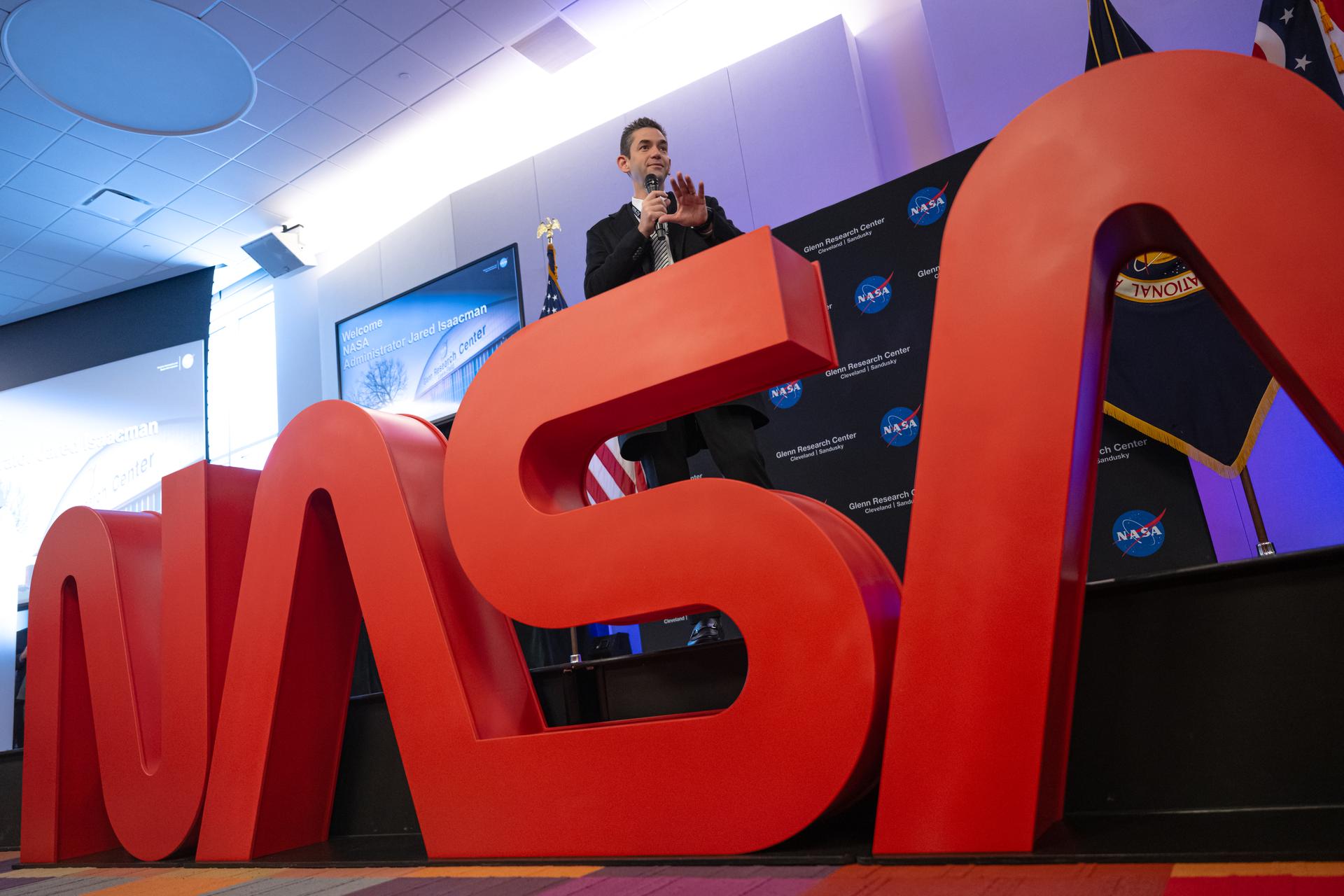
NASA Administrator Jared Isaacman speaks during a workforce Q&A session, Tuesday, Jan. 27, 2026, at NASA’s Glenn Research Center in Cleveland, Ohio. Glenn marks the eleventh stop in Isaacman’s roadshow to visit NASA facilities and engage directly with the agency’s workforce.
NASA/John Kraus
NASA will host a public event at 9 a.m. EDT on Tuesday, March 24, at the Mary W. Jackson NASA Headquarters in Washington to outline how the agency is executing President Donald J. Trump’s National Space Policy and accelerating preparations for America’s return to the surface of the Moon by 2028.
The program will open with remarks from NASA Administrator Jared Isaacman, followed by a series of high-level panels providing updates on mission priorities, including sending the first astronauts to the lunar surface in more than 50 years, establishing the initial elements of a permanent lunar base, getting America underway in space on nuclear propulsion, and other objectives.
At 4:45 p.m., NASA will hold a live news conference from headquarters to provide an update on the agency’s progress toward implementing the National Space Policy and recapping major announcements discussed throughout the day.
NASA participants include:
- Administrator Jared Isaacman
- Associate Administrator Amit Kshatriya
- Dana Weigel, program manager, International Space Station Program
- Carlos Garcia-Galan, program executive, Moon Base
- Steve Sinacore, program executive, Fission Surface Power
- Dr. Nicola Fox, associate administrator, Science Mission Directorate
- Dr. Lori Glaze, program manager, Moon to Mars Program
The full program and news conference will stream live on NASA+, Amazon Prime, and the agency’s YouTube channel. Learn how to stream NASA content through a variety of online platforms, including social media.
This event is invitation-only for in-person attendance. To participate virtually in the news conference, members of the media must RSVP no later than two hours before the start of the event to Cheryl Warner at: cheryl.m.warner@nasa.gov. NASA’s media accreditation policy is available online.
For more information about NASA’s missions, visit:
-end-
Bethany Stevens / Cheryl Warner
Headquarters, Washington
202-358-1600
bethany.c.stevens@nasa.gov / cheryl.m.warner@nasa.gov
Related Knowledge
mentions
Lunar Exploration
Lunar exploration involves the study and investigation of the Moon through various missions, including landers and rovers. It aims to understand the Moon's geology, resources, and potential for future human habitation.
mentions
National Space Policy
National space policy outlines a country's objectives and strategies for space exploration and utilization. It encompasses various aspects such as international cooperation, commercial space activities, and scientific research, aiming to enhance national security and economic growth.