Space Science
New Perspective of Home
Apr 10, 2026, 4:33 PM
出典: NASA News
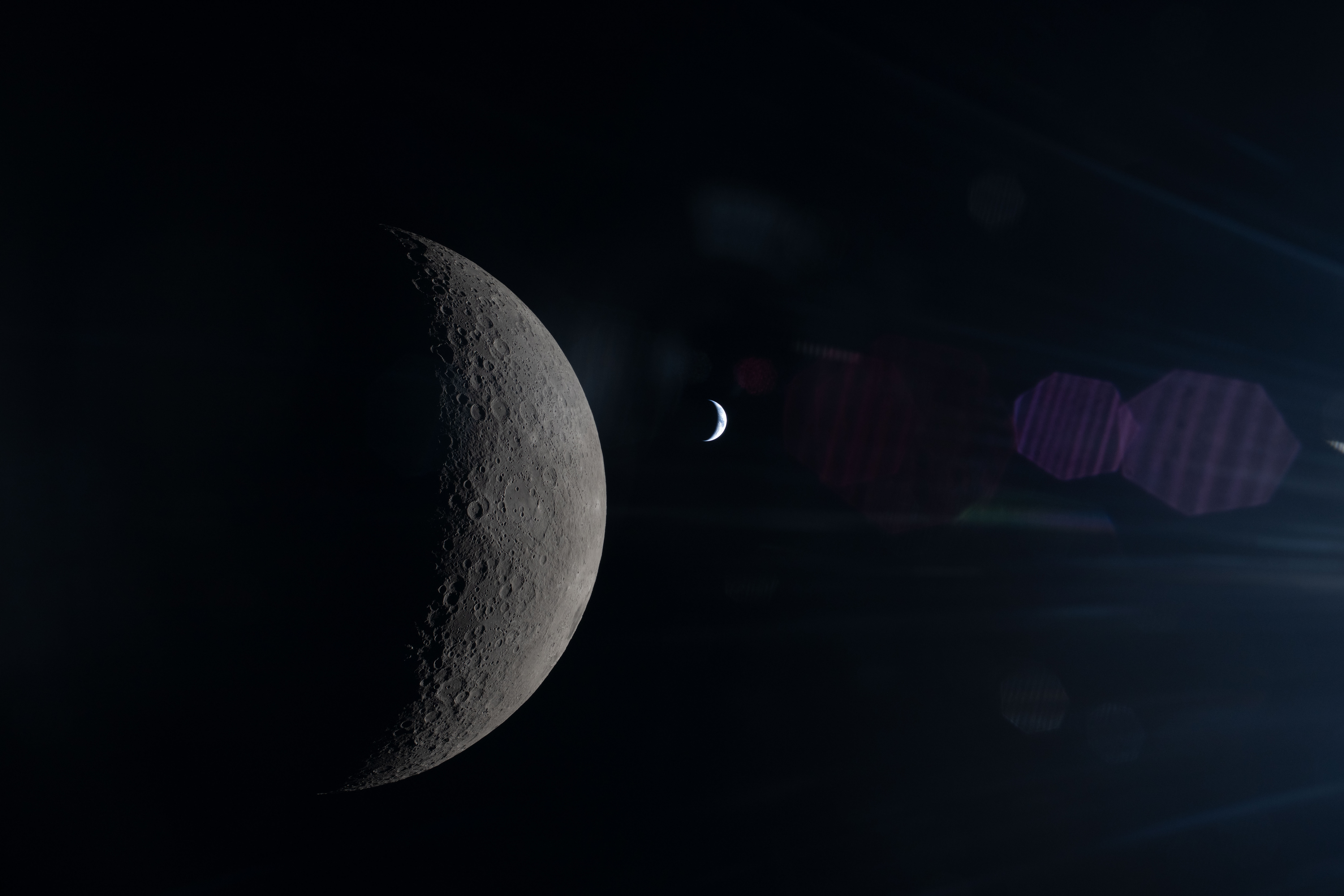
Seen during Artemis II’s lunar flyby on April 6, 2026, the Moon and Earth align in the same frame, each partially illuminated by the Sun. The Moon’s surface appears in sharp detail in the foreground, while Earth sits much farther away, smaller and softly lit in the background. A faint reflection in the spacecraft window […]
Details
NASA
Seen during Artemis II’s lunar flyby on April 6, 2026, the Moon and Earth align in the same frame, each partially illuminated by the Sun. The Moon’s surface appears in sharp detail in the foreground, while Earth sits much farther away, smaller and softly lit in the background. A faint reflection in the spacecraft window is also visible, subtly overlaying the scene. Though their phases differ, both are shaped by the same sunlight, revealing the geometry of the Sun–Earth–Moon system from deep space.
NASA astronauts Reid Wiseman, Christina Koch, and Victor Glover, and CSA (Canadian Space Agency) astronaut Jeremy Hansen are set to return to Earth, splashing down in the Pacific Ocean around 8:07 p.m. EDT. Watch their return with NASA.
Image credit: NASA
Related Knowledge
mentions
Lunar Exploration
Lunar exploration involves the study and investigation of the Moon through various missions, including landers and rovers. It aims to understand the Moon's geology, resources, and potential for future human habitation.
mentions
Earth-Moon System
The Earth-Moon system is a gravitationally bound system consisting of the Earth and its only natural satellite, the Moon. This system plays a crucial role in various phenomena, including tides, and is a focal point for scientific research and exploration.