Space Science
Sendoff for Artemis II Crew
Mar 30, 2026, 6:18 PM
出典: NASA News
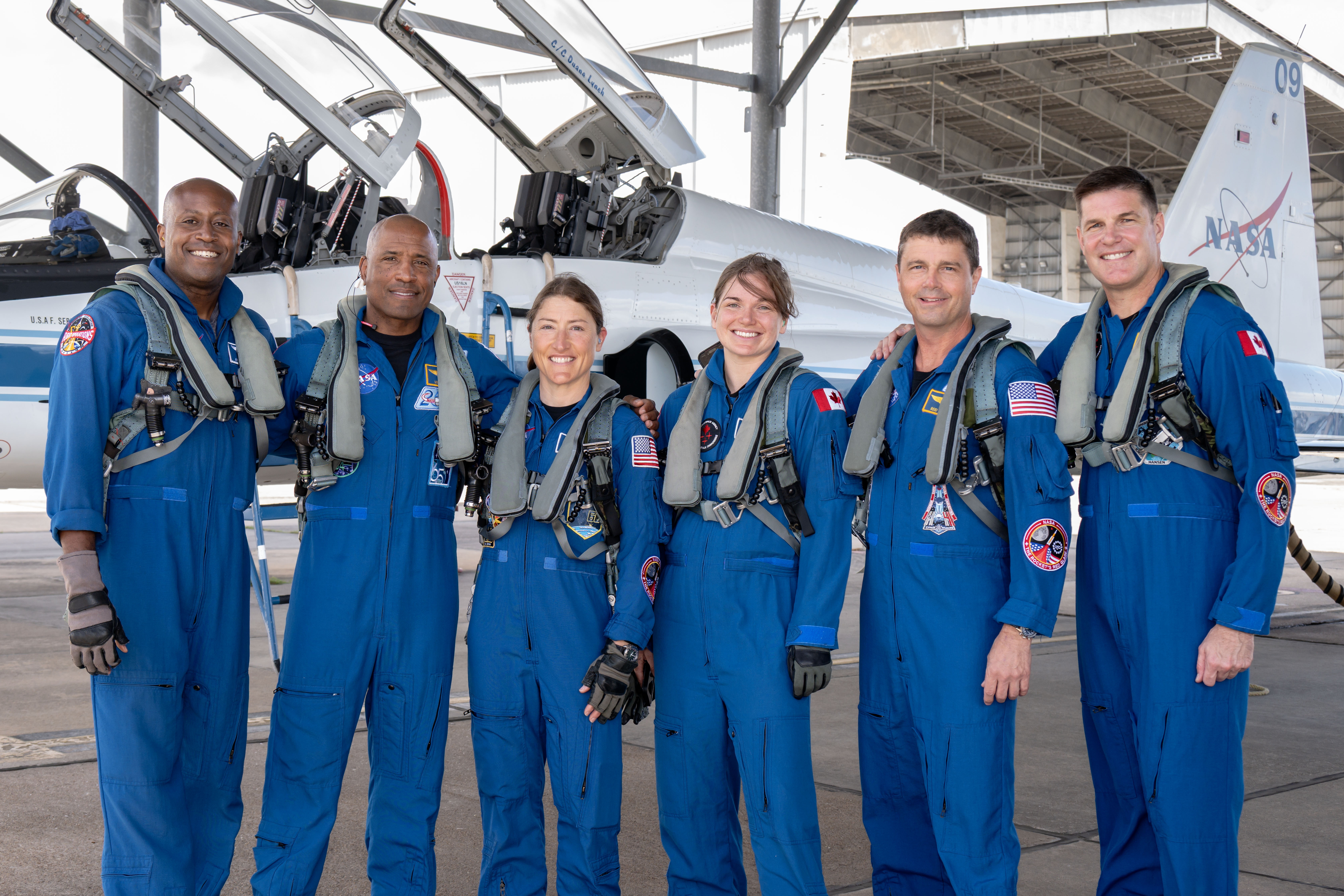
From left to right, NASA astronauts Andre Douglas, Victor Glover, and Christina Koch, CSA (Canadian Space Agency) astronauts Jenni Gibbons, NASA astronaut Reid Wiseman, and CSA astronaut Jeremy Hansen pose for a photo before the Artemis II crew proceed to a media event on March 27, 2026. Douglas and Gibbons are the backup crew members […]
Details
NASA/Josh Valcarcel
From left to right, NASA astronauts Andre Douglas, Victor Glover, and Christina Koch, CSA (Canadian Space Agency) astronauts Jenni Gibbons, NASA astronaut Reid Wiseman, and CSA astronaut Jeremy Hansen pose for a photo before the Artemis II crew proceed to a media event on March 27, 2026. Douglas and Gibbons are the backup crew members for the mission; they would join the crew if a NASA or CSA astronaut, respectively, is unable to take part in the flight.
Artemis II is NASA’s first crewed mission under the Artemis program and will launch from the agency’s Kennedy Space Center in Florida. It will send Wiseman, Glover, Koch, and Hansen on an approximately 10-day journey around the Moon. Among other objectives, the agency will test the Orion spacecraft’s life support systems for the first time with people and lay the groundwork for future crewed Artemis missions.
Image credit: NASA/Josh Valcarcel
Related Knowledge
mentions
Artemis Program
The Artemis Program is a NASA initiative aimed at returning humans to the Moon by the mid-2020s, with the goal of establishing a sustainable human presence on the lunar surface and preparing for future missions to Mars.
mentions
Crewed Space Missions
Crewed space missions involve sending astronauts into space to conduct research, perform experiments, and explore celestial bodies. These missions are crucial for advancing our understanding of space and human capabilities in extraterrestrial environments.