Space Science
Smiles and Spacesuits
Mar 20, 2026, 6:27 PM
出典: NASA News
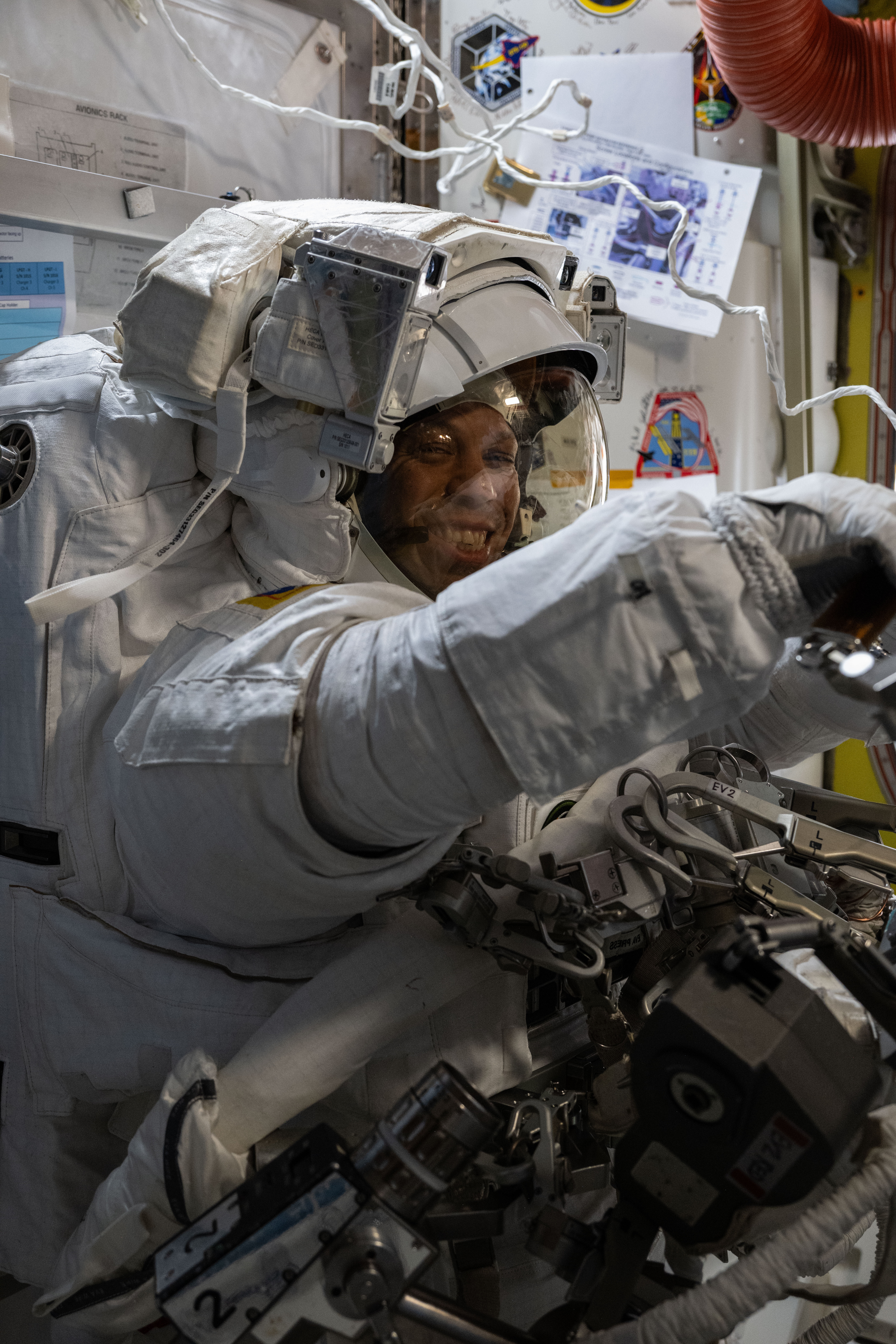
NASA astronaut Chris Williams smiles at the camera during a spacesuit fit verification on Jan. 2, 2026, inside the International Space Station’s Quest airlock. This procedure confirms that the spacesuit is airtight and properly configured, assesses comfort and mobility, and helps prevent potential safety risks. Williams and fellow NASA astronaut Jessica Meir completed an approximately […]
Details
NASA/Zena Cardman
NASA astronaut Chris Williams smiles at the camera during a spacesuit fit verification on Jan. 2, 2026, inside the International Space Station’s Quest airlock. This procedure confirms that the spacesuit is airtight and properly configured, assesses comfort and mobility, and helps prevent potential safety risks.
Williams and fellow NASA astronaut Jessica Meir completed an approximately seven-hour and two-minute spacewalk on March 18, 2026. The pair did tasks that will enable the future installation of roll-out solar arrays. These arrays will provide additional power for the orbiting laboratory, supporting critical systems and its safe, controlled deorbit.
Learn more about station activities on the International Space Station blog.
Image credit: NASA/Zena Cardman
Related Knowledge
mentions
Spacesuit Technology
Spacesuit technology involves the design and engineering of protective garments for astronauts, enabling them to survive in the harsh environment of space. These suits provide life support, temperature regulation, and protection from radiation and micrometeoroids.
mentions
Airtight Sealing in Spacecraft
Airtight sealing is crucial in spacecraft to maintain a stable atmosphere and protect astronauts from the vacuum of space. Proper sealing prevents leaks that could compromise life support systems and ensures the safety of the crew.