Space Science
Solar Eclipse of the Heart
Apr 8, 2026, 5:12 PM
出典: NASA News
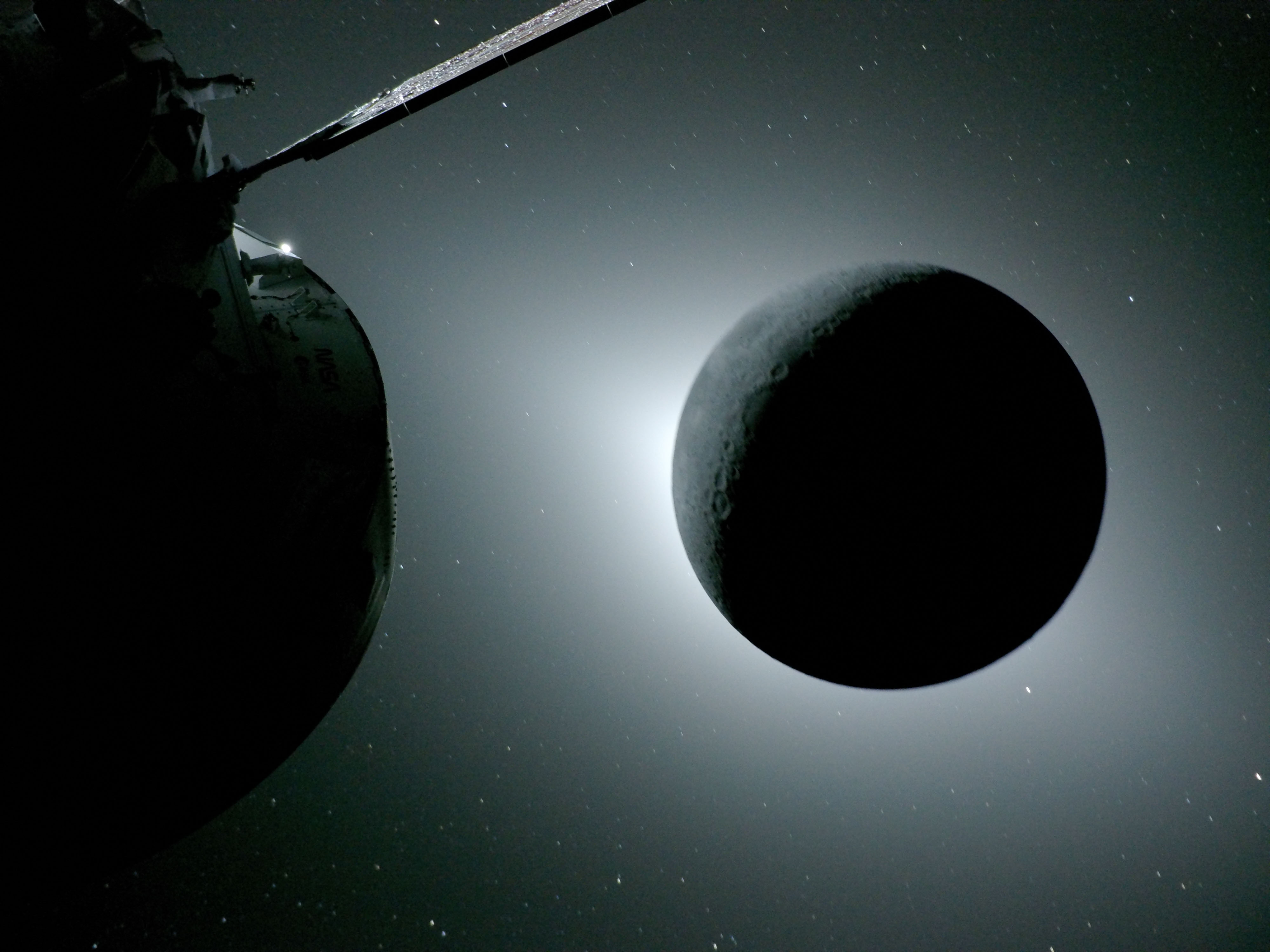
The Moon, seen here backlit by the Sun during a solar eclipse on April 6, 2026, is photographed by one of the cameras on the Orion spacecraft’s solar array wings. During lunar flyby, the Artemis II astronauts observed a solar eclipse that only they could see due to their unique position. See more photos from […]
Details
NASA
The Moon, seen here backlit by the Sun during a solar eclipse on April 6, 2026, is photographed by one of the cameras on the Orion spacecraft’s solar array wings. During lunar flyby, the Artemis II astronauts observed a solar eclipse that only they could see due to their unique position.
See more photos from the Artemis II mission.
Image credit: NASA
Related Knowledge
mentions
Solar Eclipses
A solar eclipse occurs when the Moon passes between the Earth and the Sun, blocking all or part of the Sun's light. There are different types of solar eclipses, including total, partial, and annular eclipses, each with unique visual and astronomical characteristics.
mentions
Lunar Flybys
A lunar flyby is a space mission technique where a spacecraft passes close to the Moon to gather data or perform observations without landing. This method allows for efficient exploration of the Moon and can provide valuable scientific information.